
How to Read a Fish Oil Label: A Guide to Omega-3 Supplement Facts
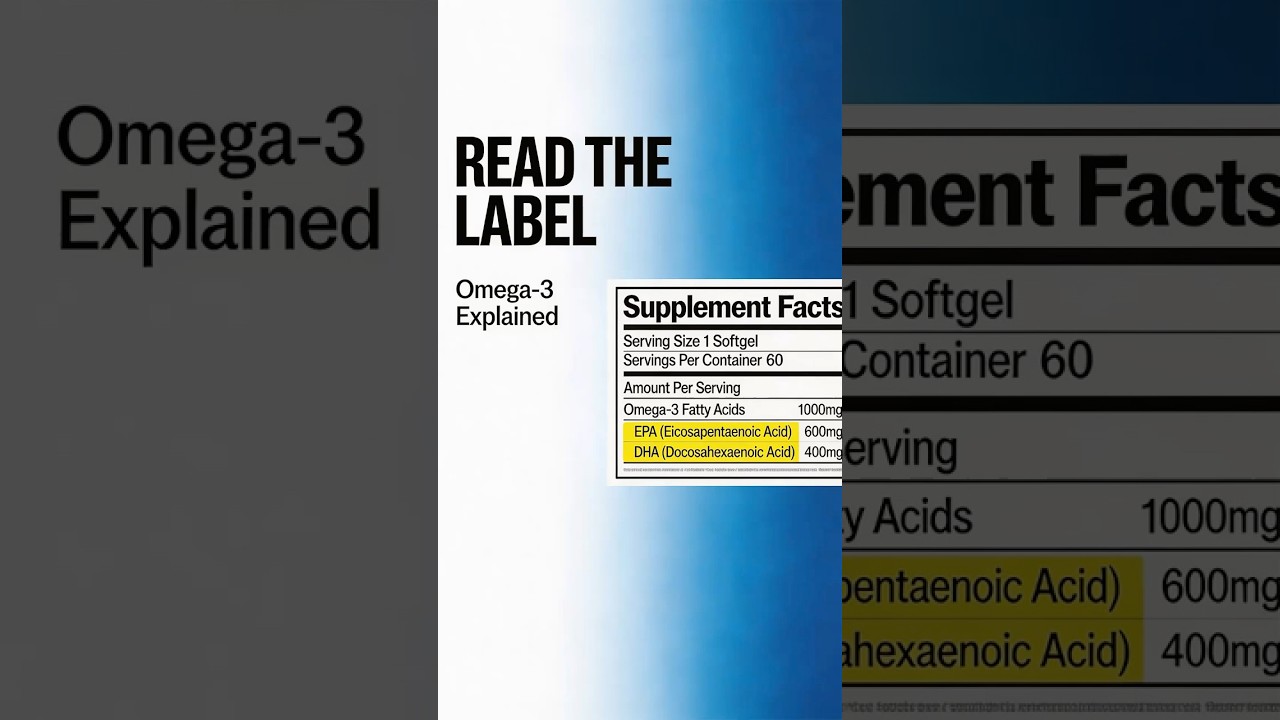
- Fish oil labels contain critical information inside the Supplement Facts panel.
- Serving size determines the real EPA and DHA intake.
- Total fish oil is different from total Omega-3 content.
- Understanding EPA and DHA values helps compare Omega-3 supplements accurately.
As consumer awareness continues to grow in 2026, understanding how to read a fish oil label has become an essential part of evaluating Omega-3 supplements. Rather than focusing only on front-label marketing, many buyers now rely on Supplement Facts panels to compare structure, concentration, and ingredient disclosure.
This shift toward label literacy reflects a broader movement toward data-driven supplement evaluation in the United States.
Step 1: Start with the Serving Size
The first section of any fish oil Supplement Facts panel is the serving size. This determines how all listed values should be interpreted.
For example, if a serving size equals two softgels, all EPA and DHA amounts reflect the combined total of those two capsules—not a single capsule.
Understanding serving size prevents common misunderstandings when comparing Omega-3 supplements across brands.
Step 2: Distinguish Between Fish Oil and Total Omega-3
One of the most common areas of confusion is the difference between total fish oil and total Omega-3 fatty acids.
- Total fish oil represents the full marine oil content per serving.
- Total Omega-3 refers only to the specific fatty acids within that oil.
This explains why a supplement may contain 1,000 mg of fish oil but only a portion of that amount as EPA and DHA.
Step 3: Identify EPA and DHA Values
EPA (eicosapentaenoic acid) and DHA (docosahexaenoic acid) are typically listed beneath total Omega-3 in the Supplement Facts panel.
Why EPA and DHA Are Listed Separately
Separating EPA and DHA helps consumers understand the exact composition of a fish oil supplement.
- Compare EPA/DHA ratios
- Calculate Omega-3 per capsule
- Evaluate structural differences across brands
EPA vs DHA Overview
| Factor | EPA | DHA |
|---|---|---|
| Full Name | Eicosapentaenoic Acid | Docosahexaenoic Acid |
| Typical Source | Marine Oils | Marine Oils |
| Label Position | Under Total Omega-3 | Under Total Omega-3 |
Step 4: Review Capsule Count and Bottle Size
Label literacy also involves checking the number of softgels per bottle and calculating how long a product will last based on serving size.
This helps consumers evaluate product value more accurately rather than relying solely on bottle price.
Step 5: Examine Transparency Indicators
Beyond numerical values, structured fish oil labels may also include transparency indicators such as:
- Source fish disclosure
- Purification or refinement processes
- Third-party testing statements
- Consistent Supplement Facts formatting
These indicators contribute to clearer communication and easier comparison between products.
Common Mistakes When Reading Fish Oil Labels
- Confusing total fish oil with total Omega-3
- Ignoring serving size
- Assuming EPA/DHA values apply per capsule
- Overlooking concentration differences
Related Omega-3 Guides
- How to Read a Supplement Facts Label for Fish Oil
- Per Serving vs Per Capsule in Fish Oil Supplements
- What Does Concentrated Fish Oil Mean
Explore Nutribota Omega-3
Review EPA and DHA values, serving structure, and full Supplement Facts.
View on AmazonFrequently Asked Questions
What is the difference between fish oil and Omega-3?
Fish oil refers to the total marine oil content, while Omega-3 represents the specific fatty acids such as EPA and DHA within that oil.
Why are EPA and DHA listed separately?
Separate listing allows consumers to compare the exact Omega-3 composition across different supplements.