
Understanding EPA and DHA as Distinct Nutritional Components
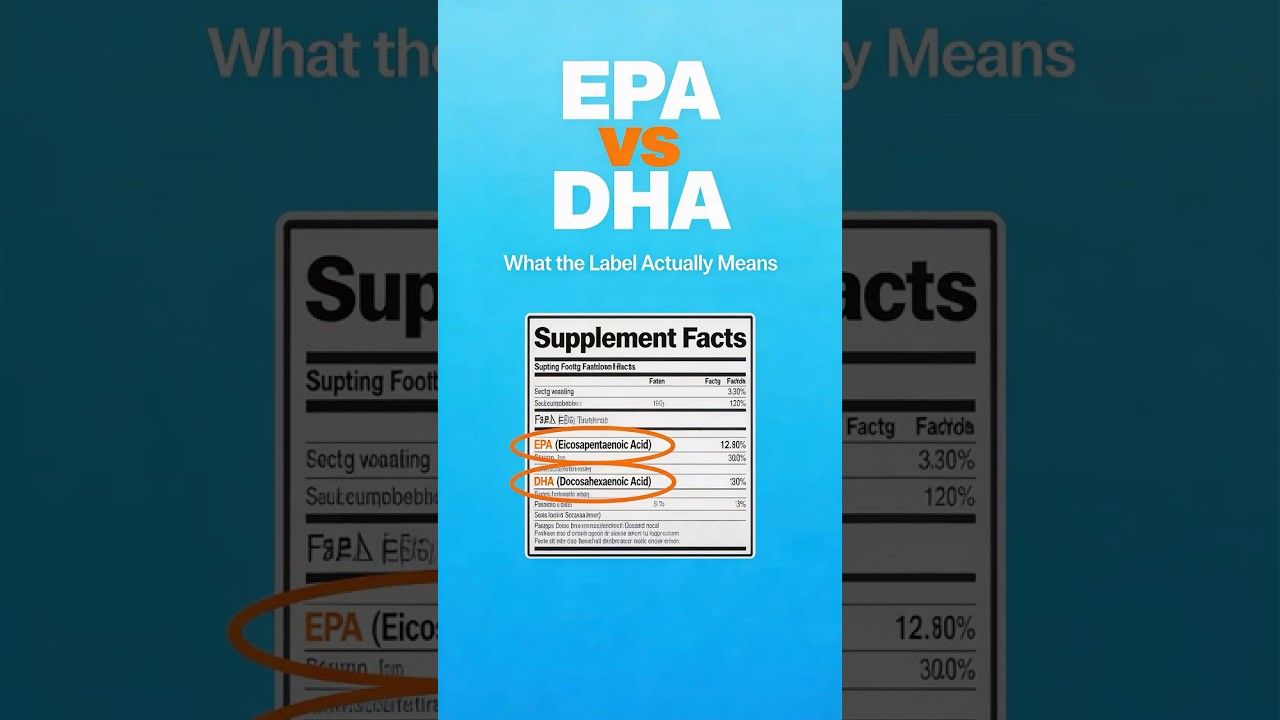
When evaluating an Omega-3 supplement, most informed consumers look beyond the total fish oil amount and instead focus on two specific fatty acids: EPA (eicosapentaenoic acid) and DHA (docosahexaenoic acid). These nutrients are commonly disclosed separately on Supplement Facts panels, allowing for clearer ingredient-level transparency.
Understanding the distinction between EPA and DHA helps consumers compare fish oil supplements more accurately, particularly in online marketplaces where label literacy plays a growing role in purchasing decisions.
Why EPA and DHA Are Listed Separately on Labels
Modern supplement labeling practices typically display EPA and DHA individually under total Omega-3 content. This structure allows buyers to see precisely how much of each fatty acid is delivered per serving.
Instead of relying only on the total fish oil milligrams, experienced consumers often examine several data points:
- EPA amount per serving
- DHA amount per serving
- Total Omega-3 concentration
- Total fish oil volume
- Serving size accuracy
This breakdown helps consumers perform clearer product comparisons, especially when evaluating supplements online.
EPA vs DHA: Structural Clarity in Omega-3 Supplements
Although EPA and DHA both belong to the Omega-3 fatty acid family, separating them on the label improves formulation transparency. Consumers searching online for terms like “EPA vs DHA difference” or “how to compare Omega-3 supplements” are often looking for numerical clarity rather than promotional claims.
Common Factors Consumers Evaluate
- EPA to DHA ratio
- Total Omega-3 concentration per serving
- Capsule count required for one serving
- Consistency between label and product description
This analytical approach reflects the broader movement toward ingredient-level awareness within the U.S. supplement market.
How EPA and DHA Appear on Supplement Facts Panels
On most fish oil supplement labels, EPA and DHA appear directly beneath the total Omega-3 value. A typical label structure may include:
- Serving size (for example: 2 softgels)
- Total fish oil amount
- Total Omega-3 fatty acids
- EPA content per serving
- DHA content per serving
Reviewing these values allows consumers to understand how Omega-3 concentration differs from the overall fish oil quantity.
For a deeper explanation of label interpretation, you can also read: How to Read a Supplement Facts Label for Fish Oil .
Why Ingredient-Level Transparency Matters
In today’s supplement market, buyers increasingly value clear data presentation. Transparent disclosure of EPA and DHA enables consumers to interpret product composition independently.
Structured labeling reduces ambiguity and strengthens consumer confidence when evaluating different brands.
If you want to learn more about transparency in marine ingredients, see: Supply Chain Transparency in Marine Ingredients .
How to Compare EPA and DHA Across Brands
When comparing Omega-3 supplements across brands or online marketplaces, a structured evaluation method can be helpful.
- Start by checking the serving size
- Compare EPA and DHA amounts per serving
- Review the total Omega-3 concentration
- Evaluate label clarity and data transparency
This method allows consumers to make clearer comparisons when browsing supplements on Amazon or other platforms.
Nutribota’s Approach to Transparent Omega-3 Labeling
At Nutribota, product communication emphasizes ingredient transparency and clear EPA and DHA disclosure. Labels are designed to present measurable nutritional information in a consistent format so that consumers can interpret Supplement Facts panels more easily.
View Detailed EPA & DHA Label Information
Explore the full Supplement Facts panel, ingredient transparency, and serving size structure on the Amazon product page.
View Product Details on AmazonFrequently Asked Questions About EPA and DHA
What is the difference between EPA and DHA?
EPA and DHA are both Omega-3 fatty acids found in marine oils. They are commonly listed separately on supplement labels to show their individual amounts within total Omega-3 content.
Why do fish oil supplements show EPA and DHA separately?
Listing EPA and DHA separately improves transparency and allows consumers to see the exact fatty acid composition of the supplement.
Is total fish oil the same as Omega-3?
No. Fish oil refers to the total oil extracted from fish, while Omega-3 refers specifically to EPA, DHA, and related fatty acids contained within that oil.
What should consumers check first on an Omega-3 label?
Most experts recommend starting with the serving size and then reviewing the EPA, DHA, and total Omega-3 values listed on the Supplement Facts panel.
This article is intended for educational purposes only and does not constitute medical advice. Individuals should consult a qualified professional for personal health-related decisions.